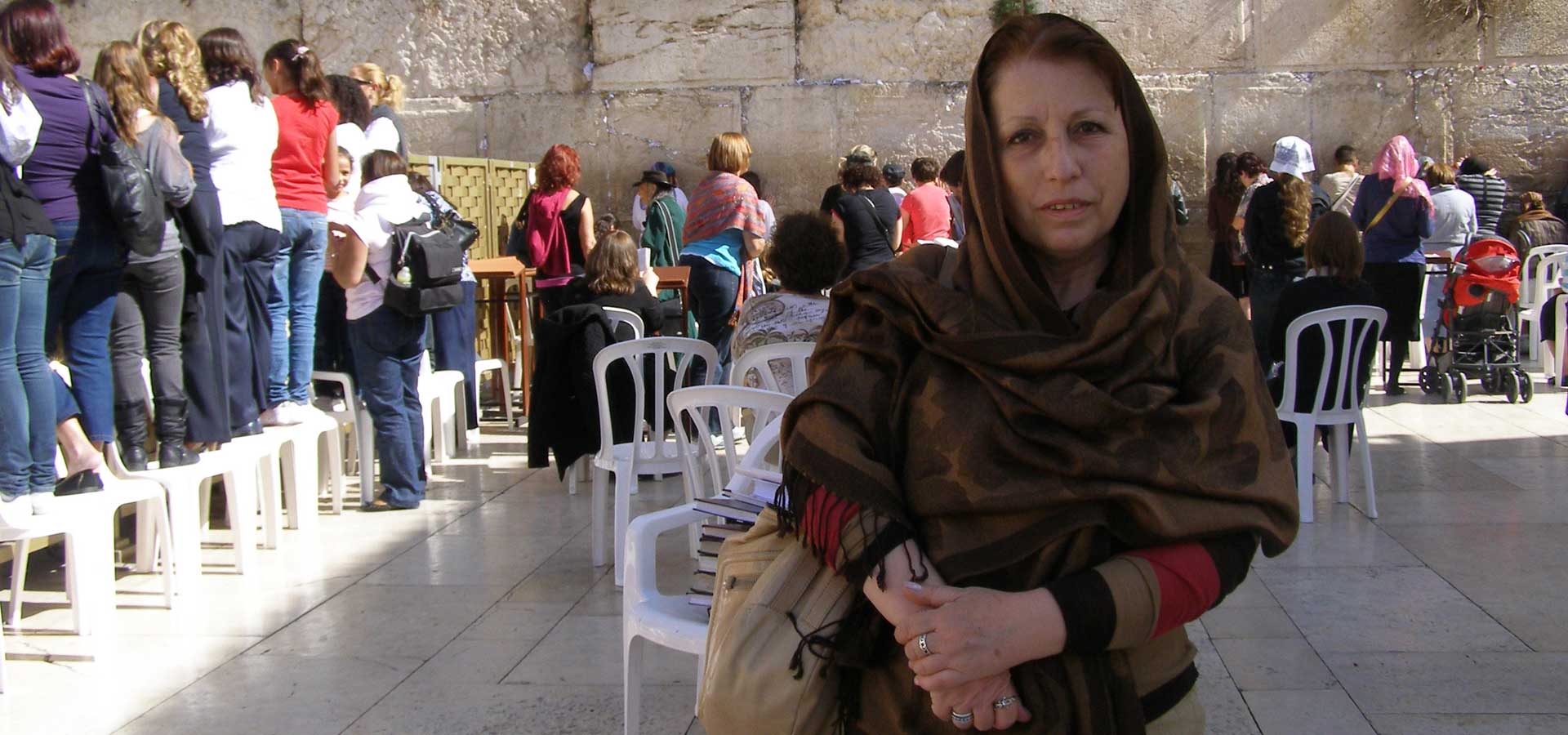
Beba Shlosberg
photografer, artist
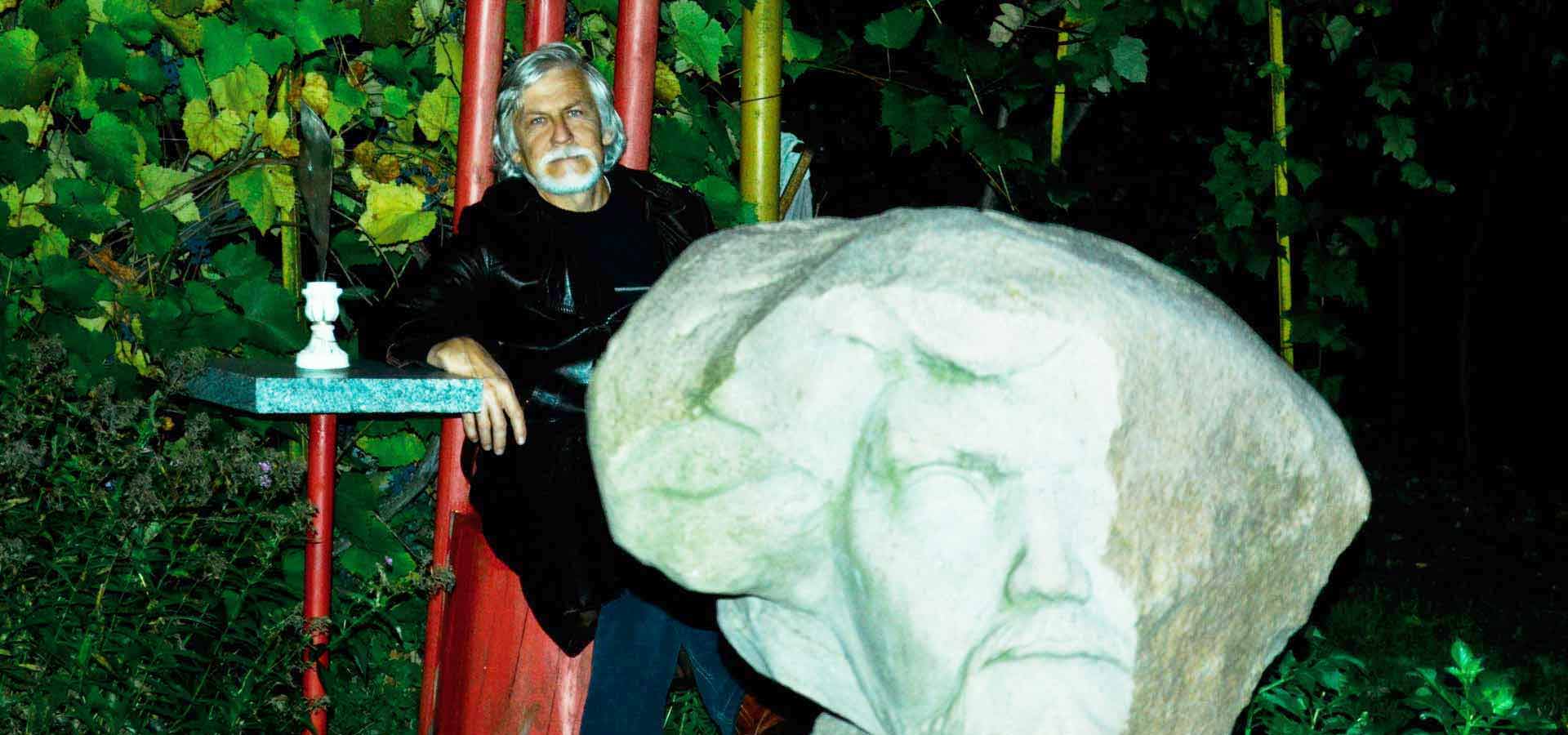
Sergey Zhilevich
artist, poet
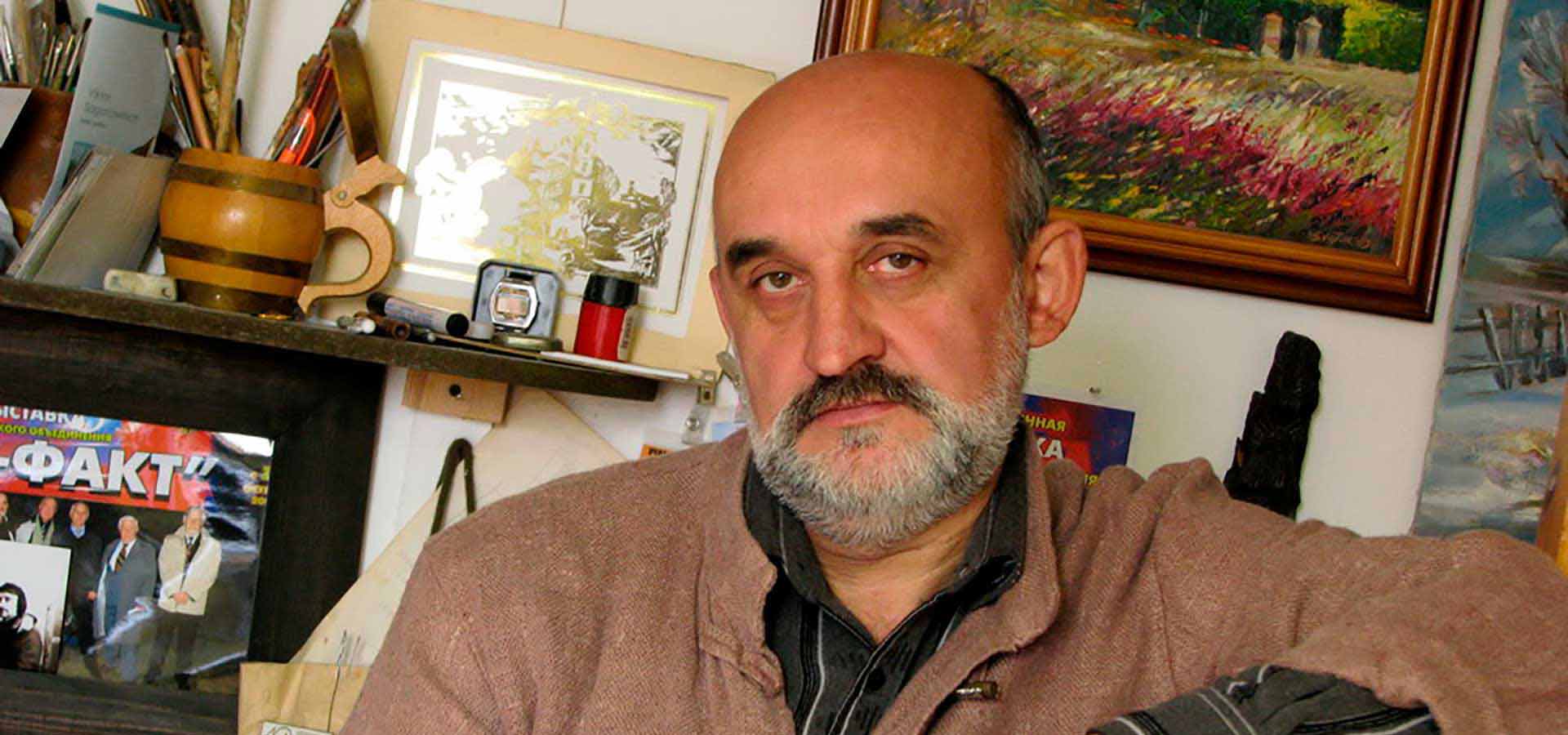
Viktor Saganovich
artist
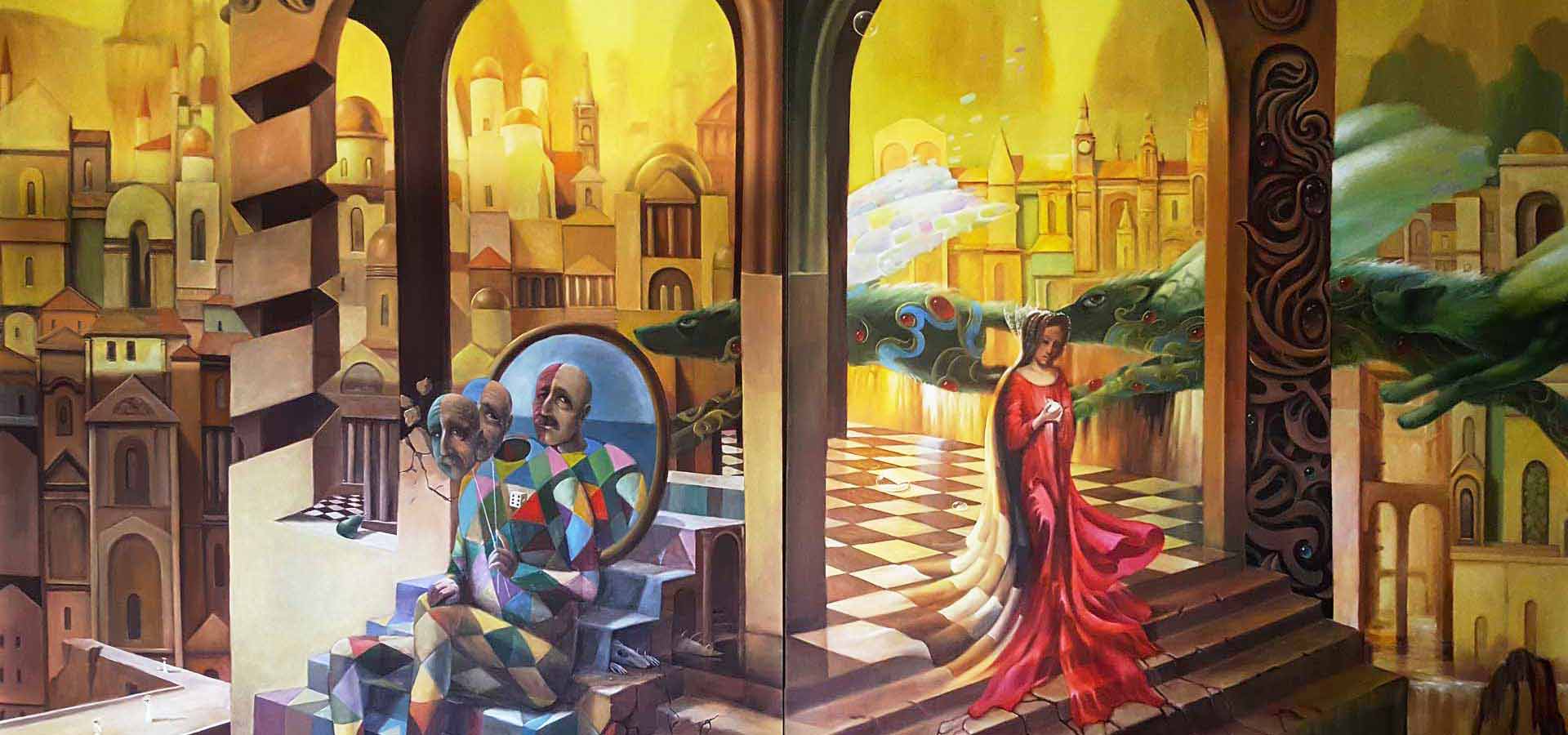
Izya Shlosberg
artist, author
photografer, artist
artist, poet
artist
artist, author

The Artfact Club unites multi-talented individuals who have already proven their significance in art, literature, sports, performance, and other creative fields. Most members of the club possess two or more talents simultaneously. The geographical scope of the members' activities spans both hemispheres of the Earth. All the artists in the club have experience in international exhibitions, the scientists have confirmed their status through scientific works and awards, and most authors are winners of various competitions and have publications in dozens of books and journals.
The club's history begins in the mid-1980s in Belarus. A group of artists came together for joint exhibitions both in the country and abroad. After 2000, poets, writers, and musicians joined the artists, followed later by scientists. Each member has a biography rich in creativity across various fields.
The club is private, and new members join by invitation or recommendation.

Scientist, astrophysicist, PhD, follower of the many-worlds ideas of Hugh Everett, the author of the term Everett. Organized and leads video discussions about Everett with other physicists, philosophers and even psychiatrists. One of the most famous Russian-language science fiction writers. He began publishing in magazines at the age of fifteen. Today, he is the author of more than 30 books, many publications in collections and magazines, editor of the Milky Way magazine.
Author of a course on the development of creative imagination and ten popular science books. Laureate of literary awards in the field of science fiction: Aelita (analogous to the American Hugo Award), the I. A. Efremov Award, the A. R. Belyaev Award, etc.

A famous bard, one of the ten most famous songwriters in the country. Performs on stage at the most famous halls and venues, solo and with the most popular performers both in Russia and in many countries. A wonderful, recognizable by style, very soulful poet and musician. Plays the guitar and piano.
The children are talented, like their mother. Son Anton Dolin is a famous film critic, husband is a film director. The family's universal favorite is a shaggy poodle.

Graduated from the Moscow Aviation Institute. Candidate of Technical Sciences in two specialties, associate professor in the specialty "Navigation Instruments"; author of articles published in the journals "Aerospace Instrumentation", "Gyroscopy and Navigation", "World of Avionics" and others, winner and prize-winner of conferences of young scientists
Passionate competition participant and multiple winner of online tournaments. From 2008 to 2013, editor of the magazine "RBZh-Azimuth" (Odessa); as a compiler and editor, she took part in the work on the anthologies "Adventure Called Life" (2009), "Tomorrow Will Be the Wind" (2010) and "Azimuth 2010" (a joint project of "RBZ-Azimuth" and Hannah Concern Inc (USA)).
The novel "The First Judge of the Labyrinth", co-authored with Marina Drobkova under the pseudonym Alexey Kirsanov received the "Golden Caduceus" in the nomination "Best Debut Book".
Alexander Gabriel was born in 1961 in Minsk. He studied at the Faculty of Industrial Heat Power Engineering at the Belarusian National Technical University (1978-1983), defended his PhD thesis in 1988, and worked as a research fellow at a scientific institute. After 1992, he engaged in commercial and banking activities, and in 1997, he emigrated with his family to the United States, where he changed his profession to software tester. He continues to work in this field to this day. For many years he has been one of the most famous Russian-language poets, author of seven poetry books, and has around a hundred publications in online and print editions.
He is a three-time laureate of the Nikolay Gumilyov Award.


Boris Kokotov was born in 1946 in Moscow. He received a technical education and worked as a research fellow at one of the Moscow research institutes. He has a number of articles and more than forty author's certificates for inventions in the field of applied electrical engineering. Boris Kokotov's literary activity began in the mid-1960s, his first collection of poems, "Prints," appeared in 1970. Since 1991, Boris Kokotov has lived in Baltimore.
He is the author of eight collections of poems in Russian and two in English, as well as a number of translations from German, English and American poetry. His poems and translations have been published in magazines, almanacs and anthologies in Russia, the USA and Germany.

Alexander Marshak received the M.S. degree in applied mathematics from Tartu University, Estonia, in 1978 and the Ph.D. degree in numerical analysis from the Academy of Sciences of the USSR, Novosibirsk, Russia, in 1983. In 1978, he joined the Institute of Astrophysics and Atmospheric Physics in Estonia, where he worked for 11 years. In 1989, he received an Alexander von Humboldt fellowship and worked for two years with Gottingen University, Germany. In 1991, he joined GSFC, first working for SSAI, then UMBC/JCET, and finally, NASA/GSFC, where he has been since January 2003.
Dr. Marshak has published over 200 refereed papers, books, and chapters in edited volumes.

The couple began their creative careers while studying together at the Oil and Gas Institute in Moscow. Both are excellent soloists, and have long had their imitators and followers, with the poetic part being Svetlana's privilege, and the musical accompaniment being Alexander's. They write music together. Over the years of the duo's existence, the Mendelevs have performed hundreds of times in Russia, Israel, the USA, Germany and other countries. The main theme of their songs is love for people, family, and country.
They are modern, they are relevant, they do not try to please, but they are imitated.
MIFI graduates. Professor Alexander Moiseyev prefers not to talk about his scientific career, although the devices created by Alexander Moiseyev have been flying in space for many years. His achievements have been appreciated not only by NASA, but also by previous companies working on space, where he had to work.
However, the spouses themselves are more proud of their sports achievements than their scientific ones, although they have medals and other awards in both areas. In rock climbing, the Moiseyevs reached the level of candidates for master of sports, and have cycled all over Europe. Larisa, using her experience as a rider, managed to cross Altai.
The list of their sports achievements is not yet complete.

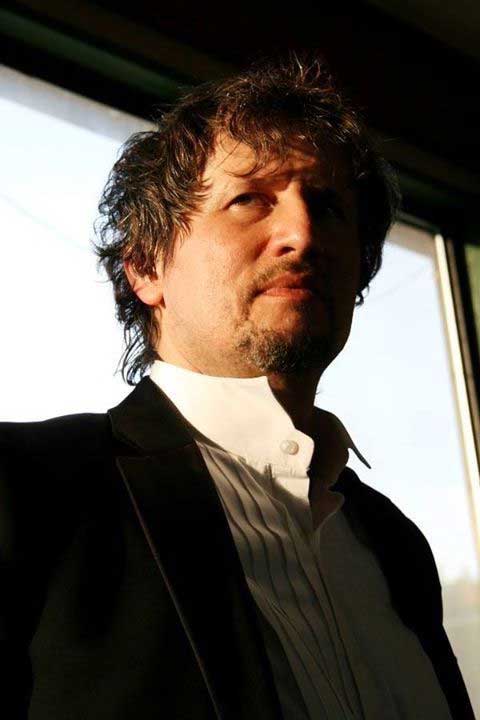
Peter Slutsky graduated from the Igumnoff College of Music of Moscow in the former Soviet Union. He came to US early 1990s and resided in Baltimore, where in time he founded the first Russian theater (Russian Amateur Drama Theatre) where he performed as an actor and producer till 1996, creating numerous plays by the famous Russian dissident writers (A. Galich, V. Vysotskiy, etc.) Here in US he took an extensive vocal operatic training and has become an active recitalist and interpreter of Russian music. On stage Peter has created unforgettable images of Germont ("La Traviata"), Figaro (("Marriage of Figaro"), Belcore ("Elixir of Love"), Tevye ("Fiddler on the roof") and many others. He is known for outstanding acting abilities, distinctive musical identity and unique beauty and color of his voice.
Peter has pioneered with the "New Russian Theatre" Company, MD to perform in the original adaptations of M. Glinka's "Ruslan and Lyudmila", and A. Markov's "Queen Ester". For some years Peter directed and presented New Year shows at the Russian Embassy in Washington for English-speaking kids. His recitalist activity has taken him to many venues and music festivals all along the East Coast. Peter has always been interested in preserving and popularizing the style of Russian romantic song (romance), where he is looking for combining the originality with a new blend of music, poetry and instruments.

Director, theater and film actor, TV presenter, organizer and host of concerts and shows, singer and poet Leonid Stepanov hails from Kaliningrad, where, after graduating from university and later receiving a theater education, he worked for ten years as a TV presenter, then a radio presenter, and later as a theater director, organizer and host of various shows. He also presented and opened concerts of many leading stars who came to Kaliningrad.
Possessing incredible ingenuity, he came up with interesting moves and solutions not only on stage, but even when solving technical issues.
In the USA, Leonid staged several performances in collaboration with Nonna Kaler, with the Baltimore group BHAT and with a children's group.
A graduate of the Vitebsk Institute of Art and Graphics, he exhibited his works for the first time at the city museum at the age of seventeen. He is engaged in sculpture and painting, and is fond of poetry. A member of the ArtFact group, he has exhibited his works several times outside of Belarus, where he currently lives, namely in Germany, Poland, Russia, France and Spain, the USA, and participated in Sotheby's. He created a sculpture garden, which includes more than a hundred wooden, stone and marble sculptures. Whole buses of tourists come to admire the artist's work and his famous garden.
Several of his sculptures have been commissioned by the mayor's office for cities in Belarus.

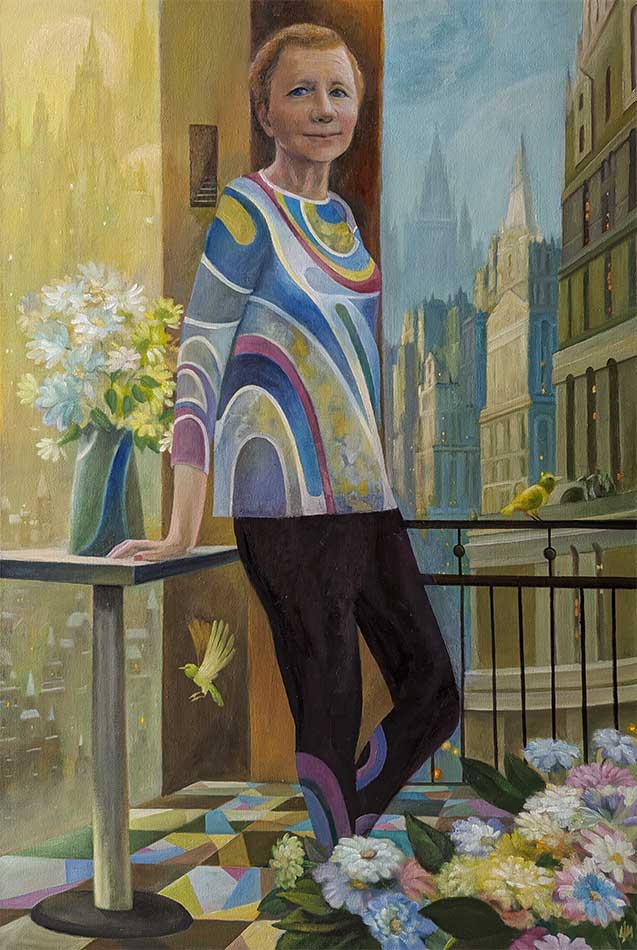
Let's hide from the insane news, pull the covers over our heads, and talk about a different kind of mental disorder: the portrait. Naturally, there were no portraits in cave paintings depicting mammoth hunts. However, as far back as Ancient Egypt, when Pharaohs began proclaiming themselves kin to the gods, images of their wives and various Nefertitis started to appear. That "god-like" quality in portraiture persisted, it seems, until Leonardo. It was he who, at fifteen as Verrocchio's apprentice, painted an angel with a remarkably lifelike face. Others might have tried to breathe life into icon-like portraits before him, but that's beside the point. From those times on, the portrait became a substitute for the camera. There used to be an old joke: a Socialist Realist painter would always paint a one-eyed hero in profile. Yet, that rule worked then and still works now - the sitters are beauties to a man, possessing a grace that would make ballerinas jealous. About thirty years ago, photorealism emerged. Despite my love for Chuck Close (who, sadly, passed away recently), his depictions of pimply middle-aged women are unsettling. Today we have photography, Photoshop, and AI. If you want a portrait, you can choose any technology at any price point. There are Chinese websites offering to copy a photo of your beloved self for a few dozen bucks. It's even cheaper to just order a print of your photo on canvas. Granted, in those cases, you can't ask for fuller lips or larger eyes-even AI, if prompted, will just give you a picture of Angelina Jolie. An artist can make corrections, but usually at the expense of the likeness. And if he's placing you into a larger composition, it's at the expense of the narrative. A big-lipped, busty nun-well, that simply won't fly. But the hardest part for an artist is to see the subject through the subject's own eyes. A man catches a glimpse of himself in a mirror under poor lighting-no wrinkles, deep-set eyes, clean-shaven. He ignores everything else and decides to commission a portrait. And so, before the artist appears a "youth" of sixty-plus years, whose face God elongated specifically so the nose would fit, with bags under his eyes reflecting a lifetime of vices-yet he arrives with money and a vague memory of that vision in the mirror. Nowadays, artists have grown craftier; they ask for photographs. Let the client find a photo where the nose actually "fits" the face himself. But who is stopped by such a trifle? "Here, artist, take the photo-but I want to look like myself, only like a movie star." Why am I saying all this? This past week, I've been battling a portrait of my wife. Her requirement is the exact opposite: she wants me to show every single wrinkle, even the ones that aren't there. You know-just so those wrinkles show exactly how much her husband has tormented her for nearly fifty years.
Back in my distant childhood, I had to paint on burlap. It was a shaggy, thick fabric filled with knots; its only saving grace was that it was made of linen. We would coat it with glue, prime it several times, and sand it down with sandpaper. But let's be honest: no matter how much you feed a chicken, it's never going to turn into a peacock. We can only look back at those canvases with a sense of irony. Eventually, store-bought canvases proved to be much better, though the oil ground on them was quite stiff it often rubbed off and didn't provide a reliable bond with the paint layer. Still, it was finally a surface you could actually work on. Today, stores offer a whole spectrum of canvases for every taste and from every brand. To be honest, I have my doubts that any of them are produced without the involvement of Chinese factories, even if they are sold as Italian or French. If you have plenty of free time and a limited budget, you can buy unprimed canvas and prime it yourself by hand. The gesso will seep through the fibers, making the back look a bit messy. I wouldn't even mention this, but galleries these days look less at what and how you paint; they care more about the "product" and its visual quality. However, manual priming does guarantee an excellent bond between the canvas and the paint. There are plenty of pre-stretched, pre-primed canvases available now. Naturally, these save a massive amount of time. However, if you aren't working with heavy impasto, I recommend priming them 1 to 3 more times yourself and sanding each layer. Today, many artists can afford to paint on canvases 1.5 meters (5 feet) or larger. In these cases, you have to stretch the canvas yourself. You can find heavy-duty canvases with a coarse texture that are difficult to smooth out for fine detail even with extra gesso, but those are intended specifically for impasto work. There are also thin canvases, but it's best to avoid them: if stretched tightly, they can tear; if stretched loosely, they sag. This is where you have to shell out for linen. Yes, it is significantly more expensive than cotton, it's thinner, and it's harder to stretch evenly. But painting on it is pure pleasure. Finally, a word about stretcher bars. Nowadays, large paintings often go without frames, so the stretcher should be thick enough to allow the edges to be painted. For large works, besides a sturdy frame, you absolutely must install crossbars (braces). They don't just help you stretch the canvas properly; they prevent the stretcher bars from warping over time.
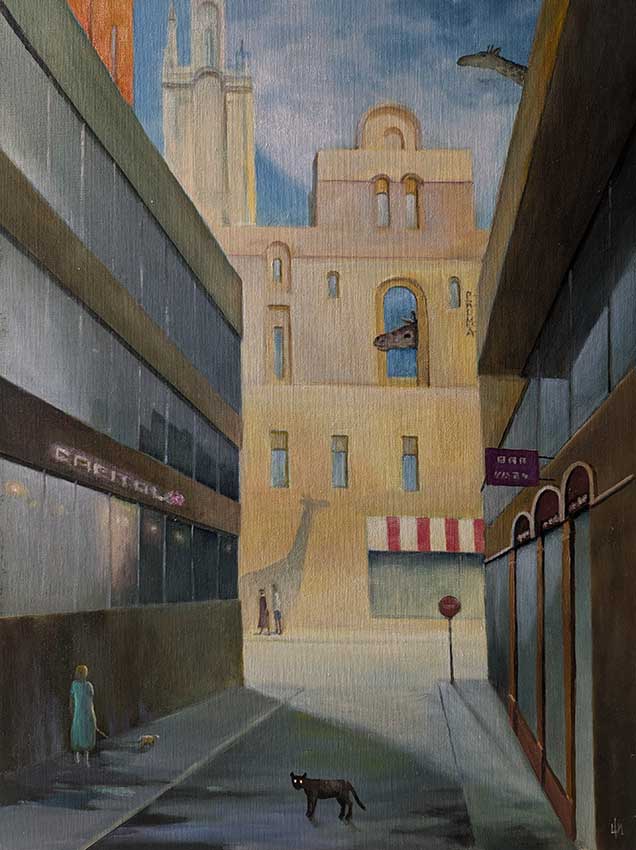
I know that many people - regardless of whether they paint as a hobby or professionally - get lost when faced with a literal army of manufacturers of paints, brushes, solvents, varnishes, and other chemicals. So, let's talk about paints today. But first, answer this: how reliable are Ferraris, Maseratis, and other super-expensive cars? And where do the police allow you to drive at breakneck speeds, except on specially designated rally tracks? You can use Google. And one more small question: if you have enough money for, say, a Toyota Corolla, would you buy a Chinese-made car instead? I think "Great Google" has already suggested that an expensive car and a reliable car are not always the same thing. And please, don't ask your neighbor. She's not Google; her mantra "the more expensive, the better" only works in a women's clothing store, and even then, with reservations. Why did I start by talking about cars? It's the same story with paints. A single tube of Old Holland can cost over fifty dollars. I'm not necessarily drawing a parallel with Ferrari here - this paint has a high concentration of pigment which, according to some sources, is still mixed by hand. However, times and technologies have changed, yet the prices remain high. Today, this manufacturer uses both natural and synthetic pigments, meaning its lightfastness is comparable to more affordable brands like Winsor & Newton, Gamblin, Sennelier, M. Graham, or Lukas 1862. By the way, Lukas often uses the fact that Van Gogh used their paints as an advertising ploy, conveniently forgetting that the artist was supported by his brother Theo, who simply could not afford to provide Vincent with the most expensive materials. I'm not urging you to buy the cheapest paints available. That's like buying a Chinese car: lots of oil, very little pigment, and questionable lightfastness. But there is a trick: if you don't work "alla prima" (i.e., you don't finish a painting in one sitting), it is best to do your underpainting with inexpensive paints. They help establish the color balance, they dry quickly, and they create a better bond between the canvas and the main layer of high-quality, lightfast paint. I didn't come up with this "hack" myself; I read about it in several sources and have been using it for decades.

 Copyright